





AI-driven modernization has transformed the way we approach legacy systems. Reengineering Legacy applications into modern languages, which was both time and effort-intensive, can now be achieved with speed and precision. Thanks to AI-infused approaches for Modernization.
Today, modernization through AI-powered processes and tools rivals traditional approaches like rehosting and refactoring in both time and efficiency. The journey doesn’t stop there. The next frontier is rapid application development using low-code/no-code (LCNC) platforms such as Appian. These platforms excel at generating design artifacts, channels, workflows, personas, and objects.
Bridging Worlds: How Reverse Engineering and Low-Code Platforms Work Together
Years of hands-on experience, reinforced by insights from industry leaders, have consistently shown that strong, well-structured business rules are essential for unlocking the full potential of legacy modernization.
Now, this is where the synergy happens: Coforge’s AI-based reverse-engineering platform, CodeInsightAI, extracts and enhances business rules, while Appian Composer leverages them to accelerate design and development.
Together, they create a seamless pipeline from legacy to modern, combining intelligence with speed for true end-to-end transformation.
Coforge’s vision, ‘Transform at the intersect,’ truly resonates with this partnership, which is symbiotic and path-breaking, and aims to utilize the core capabilities of disparate yet related tools.
By combining the power of Coforge CodeInsightAI with Appian Composer, organizations can unlock the hidden value in legacy systems and transform them into agile, user-centric applications without losing what works today.
Breaking the Code Barrier
We at Coforge believe that Modernizing legacy systems shouldn’t mean wrestling with decades of messy code. Instead, we start with AI-driven business rule extraction, turning them into clear English documents that can be validated and enhanced. These enriched rules then power rapid application development in platforms like Appian Composer.
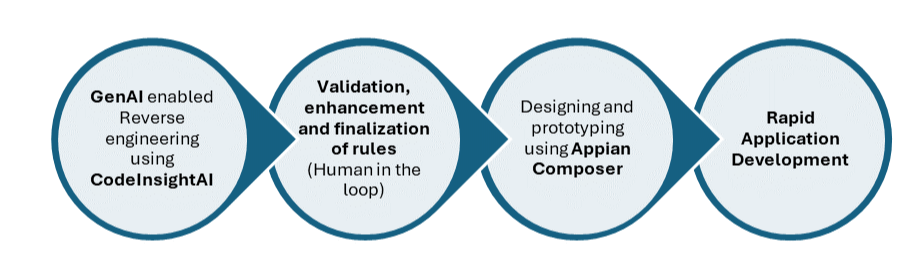
The interesting differentiator is that this layered approach uses AI twice:
- First for reverse engineering, then for
- Design automation
Creating a synergy that transforms complexity into clarity and speed.
Coforge CodeInsightAI
Coforge’s AI-powered platform, CodeInsightAI, transforms legacy code into an extensive knowledge hub through business requirements, technical specifications, and inventory documentation. The state-of-the-art toolkit enhances the efficiency of reverse and forward engineering while providing a clear view of logic, data movement, and system interdependencies.
CodeInsightAI helps remove code-related challenges by:
- Reverse engineering via direct code analysis – No reliance on legacy documentation.
- Generates domain-contextual business requirements – Bridges code and business logic.
- Semantic analysis for refactoring & optimization – Identifies unused code, improves architecture.
- Flexible integration with any Large Language Model – Mitigates risks from fragmented systems, closes legacy skill gaps with code-driven insights, & accelerates transformation.
- Configurable prompt templates & standards – Ensures consistency and organizational alignment.
Appian Composer
Appian Composer is an AI-powered capability within the Appian platform designed to streamline the early phases of application delivery, requirements capture, plan visualization, and foundational object generation. By combining a collaborative Plan view with Appian AI Copilot, Composer enables business and IT stakeholders to align on outcomes faster and to transform natural-language intents into a working application baseline (Interfaces, Data modeling, Business Rules, Process diagrams, Personas, and Groups).
Appian’s Plan View transforms this static document into a dynamic blueprint for application development, eliminating manual interpretation and accelerating delivery.
How It Works
Appian Composer leverages four key inputs - Personas, Screens, Business Rules, and Data Model to generate essential application objects. This automation reduces manual effort and provides a functional starting point for development.
Plan View
The Plan view serves as the central workspace for scoping and refining applications. Stakeholders co-create the application plan, including personas, structured data, and UI design. This shared space reduces ambiguity and ensures traceability from requirement to implementation.
AI Copilot Integration
Appian AI Copilot augments the Plan view by translating business language into Appian concepts, suggesting optimizations, and answering plan-related questions. It helps ensure requirements are complete and design decisions are consistent with platform best practices.
Automatic Object Generation
Composer can generate a functional baseline including groups, record types with relationships and summary views, basic process models, interfaces, business rules, and a configured landing page. This reduces manual setup and accelerates initial development, allowing teams to focus effort on business logic and quality.
Generated Outputs from Composer: Appian Composer can generate qualified requirements from the requirements uploaded.
Personas: Appian Composer generates personas based on qualified requirements.
Process: Appian Composer generates a high-level end-to-end process flow from the qualified requirements.
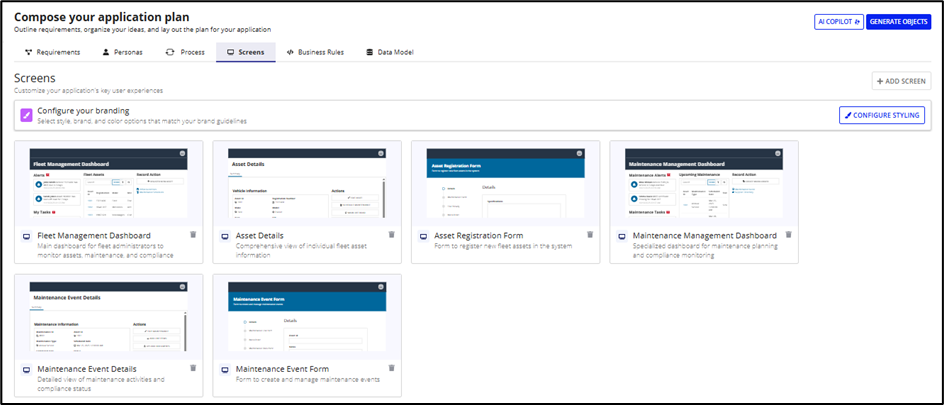
Screens: Appian Composer generates UIs and provides flexibility to change the styling of the generated UIs.
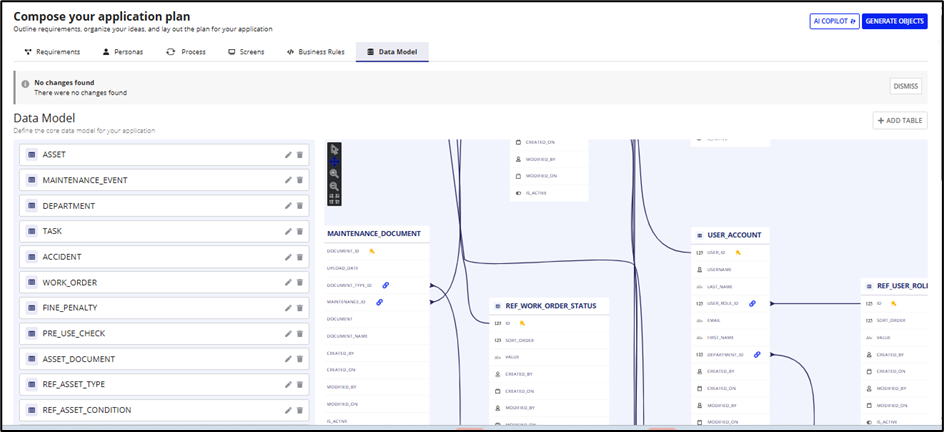
Data Model: Appian Composer generates detailed data models from the qualified requirement documents.
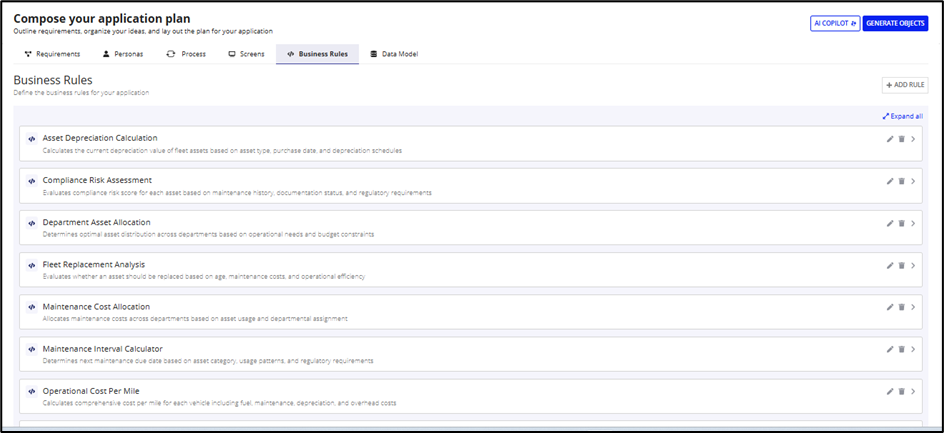
Business Rules: Appian Composer creates business rules from the qualified requirement documents.
The Power Duo: Rules Extraction + Appian Composer
Bringing CodeInsightAI's AI-powered reverse engineering together with Appian Composer's AI-enabled design capabilities creates a modernization pipeline that is both intelligent and fast.

Reverse engineering extracts and refines business rules from legacy systems, while Appian transforms those rules into workflows, personas, and objects for rapid application development. This layered use of AI, first for logic extraction, then for application design automation, eliminates code complexity, accelerates delivery, and ensures accuracy.
Key Benefits:
- Eliminates Complexity: No more wrestling with spaghetti code, start with clean business rules.
- Accelerates Delivery: CodeInsightAI and Appian work together to cut enterprise application modernization timelines dramatically.
- Ensures Accuracy: Rules are validated and enhanced before design begins.
- Future-Proofs Systems: Builds modern, agile applications ready for evolving business needs.
Where This Works Best
Traditional application delivery often suffers from misalignment between business requirements and technical implementation. Lengthy workshops and documents can dilute intent and slow down delivery. Appian Composer addresses these friction points by providing a shared, visual Plan view where teams collaboratively design application scope, personas, data models, and screens, and then automatically generate foundational design objects.
Use Cases:
- Rapid prototyping of case management, request intake, and approval
- Legacy modernization initiatives require quick scoping and application baseline generation.
- Multi-stakeholder planning workshops where traceability and shared understanding are critical.
Conclusion: Legacy Lock-In to Expedited Modernization
Legacy modernization is no longer limited by the complexity of aging codebases or the pace of manual requirement discovery. By combining CodeInsightAI’s ability to extract, validate, and enrich business rules with Appian Composer’s AI-enabled application design and object generation capabilities, enterprises can move from legacy lock-in to accelerated modernization with greater clarity, speed, and confidence. This integrated approach helps teams preserve critical business logic, reduce delivery friction, and create a faster path to agile, future-ready applications.
Ready to accelerate your modernization journey? Explore how Coforge and Appian can help you convert legacy complexity into modern, intelligent applications.