





Transitioning from Pega to Salesforce represents a strategic shift towards enhanced operational efficiency and customer engagement. While the journey may seem complex, the rewards are substantial: streamlined processes, elevated customer experiences, and data-driven insights from a unified platform. In this presentation, we'll explore the critical factors, potential hurdles, and proven path to ensure a smooth and successful migration from Pega to Salesforce.
Why Migrate from Pega to Salesforce?
Uniform Platform
- An integrated suite of applications that streamlines sales, service and marketing efforts.
- Centralized data leads to improved collaboration across departments.
Scalability
- Easily adjust resources and capabilities as business needs grow.
- Supports both small businesses and large enterprises with flexible pricing models.
Integration Capabilities
- Connect seamlessly with various applications (ERP, marketing tools, etc.) through APIs.
- Leverage the Salesforce AppExchange for additional functionalities.
Planning the Migration
- Assess Your Current Pega System: Conduct a thorough assessment to identify the key functionalities, data, and processes that need to be migrated.
- Define Your Salesforce Requirements: Clearly define your specific needs and objectives for using Salesforce.
- Develop a Migration Strategy: Create a detailed migration plan outlining the scope, timeline, and resources required.
- Identify Data Mapping: Determine how data from Pega will be mapped to Salesforce objects and fields.
- Consider Customization and Integration: Evaluate the need for custom development or integrations to bridge any gaps between the two platforms.
Data Migration
- Extract Data from Pega: Use Pega's data export tools to extract relevant data in a suitable format (e.g., CSV, XML).
- Transform Data: Clean, normalize, and transform the extracted data to match Salesforce's data structure and requirements.
- Load Data into Salesforce: Use Salesforce's data import tools or APIs to load the transformed data into the appropriate Salesforce objects.
- Validate Data: Verify the accuracy and completeness of the imported data to ensure data integrity.
Functional Migration
- Identify Key Processes: Determine the critical business processes that need to be replicated in Salesforce.
- Configure Salesforce Objects and Fields: Set up Salesforce objects and fields to match the Pega data model and support the required business processes.
- Create Customizations: Develop custom objects, fields, or workflows if necessary to meet specific requirements.
- Migrate Business Rules: Translate Pega business rules into Salesforce rules, workflows, or process builders.
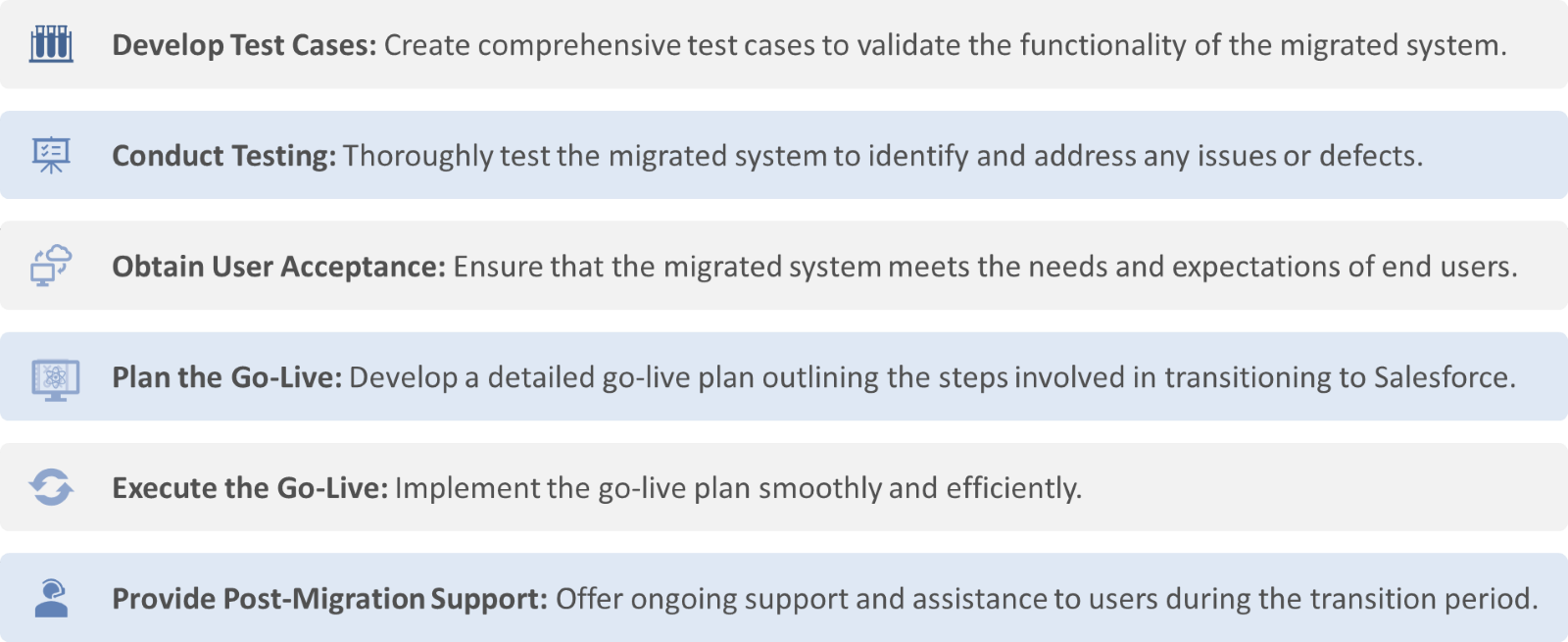
Test and Go-live
The Solution: Migrating to Salesforce Service Cloud
- Comprehensive data mapping and cleansing
- Business process reengineering to optimize workflows
- Integration with existing financial systems and third-party applications
- Customization of Salesforce to meet specific financial service requirements
Value created through Salesforce Migration
Cost Efficiency
- Reduce operational costs by consolidating systems and minimizing maintenance fees.
- Lower total cost of ownership (TCO) through cloud-based solutions.
Real-Time Insights
- Advanced analytics and reporting tools provide actionable insights.
- AI-driven features like Einstein Analytics enhance decision-making capabilities.
Customer-Centric Approach
- Tools like Marketing Cloud and Service Cloud allow for personalized customer interactions.
- Improve customer satisfaction and retention rates through targeted engagement strategies.